
Dr. habil.Astrid Carolus

Assistant Professor
Privatdozentin II Akademische Oberraetin
Project Lead:
KI-MINDSET
Psychologische Facetten
der KI-Kompetenzen von Lehrkräften
AIL AT WORK
KI-Kompetenzen am Arbeitsplatz
CHAT -
Comprehending Human-AI Interaction
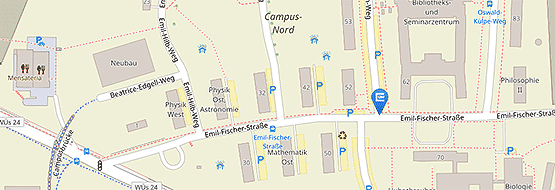
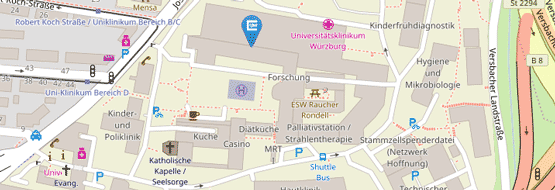
Campus Hubland Nord
Oswald-Külpe-Weg 82
Room: 2.016
mail: astrid.carolus@uni-wuerzburg.de
phone: 0931/31-82813
Vita
PD Dr. habil. Astrid Carolus studied psychology at Saarland University, focusing on media and organizational psychology, psychological assessment, evaluation, clinical psychology, and social psychology, with business administration as a minor. Even during her studies, she combined both worlds: working at the university while also gaining practical experience in a personnel and management consulting firm. After earning her diploma, she became a research associate at Saarland University.
In 2010, she joined the newly established Institute for Human-Computer-Media at the Julius-Maximilians-University of Würzburg. She completed her PhD (Dr. phil.) there in 2012 with distinction. In 2016, she was appointed as Academic Councillor (Akademische Rätin), and in 2022, as Senior Academic Councillor (Akademische Oberrätin). In 2025, she was granted the venia legendi (teaching authorization) in the field of psychology. Alongside her academic career, she continues to work as a freelance consultant and coach. Astrid Carolus is also an internationally certified coder for the Facial Action Coding System (FACS) used to analyze facial expressions.
In both her research and teaching, Astrid Carolus explores human thought, emotion, and behavior in the context of media use. Her central questions are: What do people do with media and technologies? And: What do media and technologies do to people?
Interests and research focus
A psychological perspective on humans in interaction with media and digital technologies, particularly AI-based systems. The focus lies on analyzing the use of these technologies, which are heuristically conceptualized as encounters with a social counterpart. In such interactions, not only (technical) skills but also psychological dimensions play a crucial role. Based on the identification of key success factors for the competent, autonomous, and reflective use of these technologies, innovative teaching and learning settings are developed, implemented, and evaluated—settings that foster not only AI competencies but also what may be termed an AI Mindset.
Research Objectives
-
Identifying the prerequisites for competent use of digital and AI-based technologies through the conceptualization, operationalization, and measurement of AI-related competencies.
-
Expanding the understanding of AI competencies by integrating psychological dimensions and deriving success factors that support competent, autonomous, and reflective engagement with such technologies.
-
Developing and analyzing innovative teaching and learning settings aimed at fostering digital and AI-related competencies, including both technical skills and the psychological foundation often referred to as AI Mindset.
Publications
up to date: Google Scholar
2025
Baumann, M., Markus, A., Pfister, J., Carolus, A., Hotho, A., & Wienrich, C. (2025). Master your practice! A quantitative analysis of Device and system handling training to enable competent interactions with intelligent voice assistants. Computers in Human Behavior Reports, 17, 100610.
Carolus, A., Koch, M. J., & Feng, S. (2025). Time-on-task and instructions help humans to keep up with AI: replication and extension of a comparison of creative performances. Scientific Reports, 15(1), 20173.
Krop, P., Obremski, D., Carolus, A., Latoschik, M. E., & Wienrich, C. (2025). My Co-worker ChatGPT: Development of an XR Application for Embodied Artificial Intelligence in Work Environments. 2025 IEEE Conference on Virtual Reality and 3D User Interfaces Abstracts and Workshops (VRW), 1646-1647.
Markus, A., Baumann, M., Pfister, J., Carolus, A., Hotho, A., & Wienrich, C. (2025). The impact of persuasion literacy training on anthropomorphization, privacy, and self-determined interactions with intelligent voice assistants. Cyberpsychology: Journal of Psychosocial Research on Cyberspace, 19(5).
Markus, A., Baumann, M., Pfister, J., Carolus, A., Hotho, A., & Wienrich, C. (2025). Safer interaction with IVAs: The impact of privacy literacy training on competent use of intelligent voice assistants. Computers and Education: Artificial Intelligence, 8, 100372.
Markus, A., Baumann, M., Pfister, J., Hotho, A., Carolus, A., & Wienrich, C. (2025). The impact of algorithm awareness training on competent interaction with intelligent voice assistants. Discover Education, 4(1), 125.
Markus, A., Carolus, A., & Wienrich, C. (2025). Objective Measurement of AI Literacy: Development and Validation of the AI Competency Objective Scale (AICOS). arXiv preprint arXiv:2503.12921.
2024
Carolus, A., & Wienrich, C. (2024). What does the perfect Companion in Games look like? Development and Validation of the Companion Design Scale. Journal of Games, Game Art, and Gamification, 9(1), 30-38.
Münch, C., Carolus, A., Bierhalter, L., & Füting-Lippert, A. (2024). ‹ Smart School–oder doch lieber Old School?›: Psychologische und pädagogische Analysen der Sichtweisen von Studierenden des Grundschullehramts auf Smartphones im Klassenzimmer. MedienPädagogik: Zeitschrift für Theorie und Praxis der Medienbildung, 34-68.
Muench, C., & Carolus, A. (2024). It’s Time for Some Me-Time: An Analysis of the Psychological Effects of a Six-Day-Period of Smartphone Separation. Future of Information and Communication Conference, 656-670.
Markus, A., Pfister, J., Carolus, A., Hotho, A., & Wienrich, C. (2024). Effects of AI understanding-training on AI literacy, usage, self-determined interactions, and anthropomorphization with voice assistants. Computers and Education Open, 6, 100176.
Markus, A., Pfister, J., Carolus, A., Hotho, A., & Wienrich, C. (2024). Empower the user-The impact of functional understanding training on usage, social perception, and self-determined interactions with intelligent voice assistants. Computers and Education: Artificial Intelligence, 6, 100229.
Krop, P., Koch, M. J., Carolus, A., Latoschik, M. E., & Wienrich, C. (2024). The Effects of expertise, humanness, and congruence on perceived trust, warmth, competence and intention to use embodied AI. Extended Abstracts of the CHI Conference on Human Factors in Computing Systems, 1-9.
Koch, M. J., Carolus, A., Wienrich, C., & Latoschik, M. E. (2024). Meta AI literacy scale: Further validation and development of a short version. Heliyon, 10(21).
Muench, C., & Carolus, A. (2024). Analyzing Smartphone Separation vs. Restriction on Users’ Well-Being During a Pandemic. Proceedings of the Future Technologies Conference, 266-286.
Koch, M. J., Wienrich, C., Straka, S., Latoschik, M. E., & Carolus, A. (2024). Overview and confirmatory and exploratory factor analysis of ai literacy scale. Computers and Education: Artificial Intelligence, 7, 100310.
Muench, C., Carolus, A., Bierhalter, L., & Füting-Lippert, A. (2024). ‹ Smart School–oder doch lieber Old School?›: Psychologische und pädagogische Analysen der Sichtweisen von Studierenden des Grundschullehramts auf Smartphones im Klassenzimmer. MedienPädagogik: Zeitschrift für Theorie und Praxis der Medienbildung, 34-68.
Muench, C., & Carolus, A. (2024, March). It’s Time for Some Me-Time: An Analysis of the Psychological Effects of a Six-Day-Period of Smartphone Separation. In Future of Information and Communication Conference (pp. 656-670). Cham: Springer Nature Switzerland.
2023
Carolus, A., Koch, M. J., Straka, S., Latoschik, M. E., & Wienrich, C. (2023). MAILS-Meta AI literacy scale: Development and testing of an AI literacy questionnaire based on well-founded competency models and psychological change-and meta-competencies. Computers in Human Behavior: Artificial Humans, 1(2), 100014.
Koopmann, T., Pfister, J., Markus, A., Carolus, A., Wienrich, C., & Hotho, A. (2023). Higher-Order DeepTrails: Unified Approach to* Trails. arXiv preprint arXiv:2310.04477.
Wienrich, C., Carolus, A., Markus, A., Augustin, A., Pfister, J., & Hotho, A. (2023). Long-Term Effects of Perceived Friendship with Intelligent Voice Assistants on Usage Behavior, User Experience, and Social Perceptions. Computers, 12 (4), 77. doi.org/https://doi.org/10.3390/computers12040077