
Projects

The spread of generative AI brings new opportunities, but also significant challenges for individuals and societies. Recent research findings show that texts and images created with generative AI often portray women and minorities in an unbalanced way. In some cases, certain groups are barely represented or not represented at all, or stereotypical forms of representation dominate (algorithmic bias). At the same time, initial studies indicate that people trust AI more than other people to present the world in a balanced way.
Based on relevant theories and findings, including our own research in the areas of generative AI and media-mediated stereotypes, we analyse the topic of algorithmic bias from a social science perspective. The empirical work is divided into three work packages. Our research objectives are:
a) to identify knowledge, experiences and evaluations of different stakeholder groups with regard to the phenomenon of algorithmic bias;
b) to investigate psychological mechanisms and effects in dealing with texts and images that exhibit algorithmic representation bias; and
c) to develop measures to reduce the potentially negative effects of algorithmic bias.
We expect findings that are not only important for scientists. The research findings should also be of great interest to stakeholders in politics, the media and creative industries, education and the general public.
Applicant:Prof Dr Markus Appel
Project team member:Tanja Messingschlager
Funding: Bavarian Research Institute for Digital Transformation
Duration: March 2025 - February 2029

Digital information literacy is crucial for social and professional participation in an increasingly digitalised world. This is especially true for disadvantaged young people in the vocational transition system, who are the focus of this project. The aim of the research project is to specifically promote the digital information literacy of this target group in order to improve equal opportunities and social participation. The project is developing a didactically and methodologically well thought-out and psychologically sound concept to promote the digital information literacy of disadvantaged young people, which includes cognitive and socio-emotional skills. The digital modules developed are intended to help young people to critically evaluate information, use digital media in a reflective manner and counter challenges such as fake news and cyberbullying. The concept will be implemented in close cooperation with practice partners and the target group to ensure a practical and sustainable solution.
Applicant: Prof. Dr. Markus Appel, together with PD Dr. Johanna Abendroth (main applicant), Prof. Dr. Tobias Richter (both Chair of Psychology IV: Educational Psychology, University of Würzburg), Prof. Dr. Roland Stein (Chair of Special Education in the Context of Emotional and Behavioural Disorders)
Project collaborator:Miriam Fößel
Funding: BMBF
Duration: March 2025 - February 2029

The potential of stories to enhance social understanding processes on the part of recipients, i.e. perspective taking, empathy/sympathy, prosocial schemas and attitudes, has attracted considerable attention in research. Most researchers in this field discuss the impact of narratives against the background of the terms "literary fiction" or "fictional narratives", mixing the concepts of narrativity, fictionality and/or literariness. It remains largely open which aspects of narratives determine their effect in detail: Is the narrative form or the degree of narrativity decisive for the effect of stories on processes of social understanding? Or is the literariness (high literature vs. popular/trivial literature) of stories important for their influence on social understanding? Does fictionality play a role? The project will provide a differentiated insight into these three conceptually separate aspects of stories - narrativity, fictionality and literariness - and analyse their different roles in promoting processes of social understanding.
Applicants: Prof. Dr Markus Appel and Prof. Dr Tobias Richter (Educational Psychology, University of Würzburg)
Funding: DFG
Duration: April 2023 - March 2027

Stories can change attitudes, beliefs and behaviour (persuasion through narratives). The processes that presumably underlie this influence differ from the processes described in the classic two-process models of persuasion. Immersion in the world of the story and proximity to the perspective of the characters have been emphasised as important mechanisms of narrative persuasion. Empirical studies on the concepts of transportation, narrative engagement or identification emphasise the role of emotions in persuasion through stories. Stories - from classical dramas to contemporary stories in the context of health communication - are based on the depiction of events that suggest changes in the quality and intensity of the recipients' emotional experience (emotional changes). Building on recent theoretical work, we expect these emotional shifts to be crucial for understanding persuasion through narratives. The aim of the proposed research is to clarify the role of the experience of emotional shifts on the part of recipients.
Applicants: Prof. Dr Markus Appel and Prof. Dr Tobias Richter (Educational Psychology, University of Würzburg)
Project staff: Julia Winkler , Marie-Luise Schmidt
Funding: DFG
Duration: March 2018 - December 2021
Project publications:
Schmidt, M.-L. C. R., Winkler, J. R., Appel, M., & Richter, T. (in press). Emotional shifts, event-congruent emotions, and transportation in narrative persuasion. Discourse Processes. Advance online publication. https://doi.org/10.1080/0163853X.2023.2252696
Schmidt, M.-L. C. R., Winkler, J. R., Appel, M., & Richter, T. (2023). Tracking emotional shifts during story reception: The relationship between narrative structure and affective responses. Scientific Study of Literature, 12(1), 17-39. https://ssol-journal.com/articles/177
Winkler, J. R., Appel, M., Schmidt, M.-L. C. R., & Richter, T. (2023). The experience of emotional shifts in narrative persuasion. Media Psychology, 26(2), 141-171. https://doi.org/10.1080/15213269.2022.2103711
Winkler, J. R., Mengelkamp, C., & Appel, M. (2022). Real-time responses to stories: linking valence shifts to post-exposure emotional flow and transportation. Communication Research Reports, 39(5), 237-247. https://doi.org/10.1080/08824096.2022.2119380
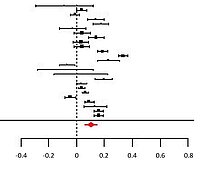
The effects and correlates of the reception and use of the Internet by children, adolescents and adults, not least in the form of social networking sites such as Facebook, are a matter of concern to both science and the public. The aim of this 36-month research project was to analyse the existing findings using a meta-analytical approach. The relevance of the meta-analytical approach results from divergent hypotheses, inconsistent findings and a research literature that is spread across many disciplines.
More information and project results can be found at www.meta-internet.com
Applicant: Prof Dr Markus Appel
Project team member: Caroline Marker
Funding: DFG
Duration: Autumn 2015 - Autumn 2019
Project publications:
Marker, C., Gnambs, T., & Appel , M. (in press). Exploring the myth of the chubby gamer: A meta-analysis on sedentary video gaming and body mass. Social Science and Medicine. https://doi. org/10.1016/j.socscimed.2019.05.030
Appel, M., Marker, C., & Gnambs, T. (2020). Are social media ruining our lives? A review of meta-analytic evidence. Review of General Psychology, 24, 60-74. https://doi. org/10.1177/1089268019880891
Appel, M., & Gnambs, T. (2019). Shyness and social media use: A meta-analytic summary of moderating and mediating effects. Computers in Human Behaviour, 98, 294-301. https://doi. org/10.1016/j.chb.2019.04.018
Gnambs, T., & Appel , M. (2018). Narcissism and social networking behaviour: A meta-analysis. Journal of Personality, 86, 200-212. https://doi. org/10.1111/jopy.12305
Marker, C., Gnambs, T., & Appel , M. (2018). Active on Facebook and failing at school? Meta-analytic findings on the relationship between online social networking activities and academic achievement. Educational Psychology Review, 30, 651-677. https://doi. org/10.1007/s10648-017-9430-6

Narratives in health communication -a multi-disciplinary approach to strengthen understanding of the roles and uses of narratives in conveying health information and changing health behaviours
Narratives play an increasingly important role in (online) communication about health issues. News reporters not only report the cold facts about an upcoming epidemic, but also increasingly employ techniques that are used in novels and movies; serious games use interactive storytelling techniques to improve the health of children; health campaigns use celebrities and role models in order to convince a target audience to adopt healthy habits. In spite of their increasing use, relatively little is known about the effects of narratives in a health communication context, as expertise on narratives is scattered across different disciplines. The objective of the HealthNar programme is (1) to strengthen and consolidate the emerging field of narrative health communication and (2) to establish a flourishing and solid multidisciplinary research exchange network on narratives and health. The programme does so by bringing together renowned international scholars from health psychology, media psychology, health communication, arts, and interactive communication.
In collaboration with research partners at UNSW Australia, University of Antwerp, Belgium, University of Augsburg, Germany, University of Koblenz-Landau, Germany, University of New South Wales, Sydney, Australia, Edith Cowan University, Perth, Australia
For more information, please click here http://healthnar.ruhosting.nl/
Applicants: Prof. Dr Enny Das (Radboud University Nijmegen) in collaboration with UNSW Australia, University of Antwerp, Belgium, University of Augsburg, Germany, University of Koblenz-Landau, Germany, University of New South Wales, Sydney, Australia, Edith Cowan University, Perth, Australia
Collaboration partner: Prof Dr Markus Appel (formerly University of Koblenz-Landau)
Project staff: Dr Silvana Weber, Dr Constanze Schreiner
Funding: EU-IRSES (International Research Staff Exchange Scheme)
Duration: 2014 - 2017

In the next 10 years, we will encounter service and assistance robots not only as characters in fictional stories, but also increasingly in various contexts of everyday life. Prototypes of robots already exist today that are used, for example, in nursing care, for household assistance or at museum reception desks. The potential spread of robots in these fields is viewed quite critically by potential European users when asked about robots in general (Eurobarometer 2012).
Numerous anecdotal reports and initial empirical findings indicate that very human-like robots in particular are often associated with aversive reactions. These negative reactions are usually explained with recourse to the uncanny-valley hypothesis, which can be reconstructed as a user-side problem of categorising a human-machine. However, the extent to which the acceptance or rejection of humanoid robots depends on contextual conditions (e.g. product description of the robot; intended field of application of the robot) or user-side factors (e.g. openness to new experiences; attitude towards technology) has hardly been investigated to date.
The aim of this project is to investigate important determinants of user attitudes towards service and assistance robots. In addition to the data from the Eurobarometer, our project provides results on the circumstances under which robots are viewed more favourably or unfavourably and thus important information for decision-makers.
Applicants: Prof. Dr Markus Appel in collaboration with the ARS Electronica Future Lab, Linz, Austria(Prof. Dr Martina Mara)
Project staff: Dr Silvana Weber, Dr Constanze Schreiner, Stefan Krause
Funding: BMBF (ITA 2014)
Duration: August 2015 - July 2017
Project publications:
Appel, M., Izydorczyk, D., Weber, S., Mara, M., & Lischetzke, T. (2020). The uncanny of mind in a machine: Humanoid robots as tools, agents, and experiencers. Computers in Human Behaviour, 102, 274-286. https://doi. org/10.1016/j.chb.2019.07.031
Appel, M., Marker, C., & Mara, M. (2019). Otakuism and the appeal of sex robots. Frontiers in Psychology, 10:569. https://doi. org/10.3389/fpsyg.2019.00569
Appel, M., Krause, S., Gleich, U., & Mara, M. (2016). Meaning through fiction: Science fiction and innovative technologies. Psychology of Aesthetics, Creativity, and the Arts, 10, 472-480. https://doi. org/10.1037/aca0000052
Appel, M., Weber, S., Krause, S., and Mara, M. (2016). "On the eeriness of service robots with emotional capabilities," in Proceedings of the 11th ACM/IEEE International Conference on Human-Robot Interaction (HRI) (Christchurch), 411-412. https://doi. org/10.1109/HRI.2016.7451781
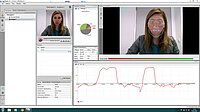
Stories are an effective tool for changing attitudes. We are constantly surrounded by them in our everyday lives, whether as films or novels, journalistic work or in the form of advertising or political campaigns.
The research project focuses on the psychological processes that underlie this change in attitude. Numerous studies suggest that "transportation", the ability to immerse oneself in the world of the story, is the decisive mechanism. A series of experiments will be conducted to investigate how transportation leads to a change in attitude.
Applicants: Prof. Dr Markus Appel and Prof. Dr Tobias Richter (Educational Psychology, University of Würzburg)
Project team members: Dr Constanze Schreiner, Dr Maj-Britt Isberner
Funding: FWF and DFG (lead agency procedure), transfer of the project from the JKU Linz to the University of Koblenz-Landau in November 2013
Duration: July 2012 - June 2016
Project publications:
Appel, M., Schreiner, C., Isberner, M.-B., & Richter, T. (2019). The mediating role of event-congruent emotions in narrative persuasion. Poetics, 77, 101385. https://doi. org/10.1016/j.poetic.2019.101385
Isberner, M.-B., Richter, T., Schreiner, C., Eisenbach, Y., Sommer, C., & Appel , M. (2019). Empowering stories: Transportation into narratives with strong protagonists increases self-related control beliefs. Discourse Processes, 56, 575-598. https://doi. org/10.1080/0163853X.2018.1526032
Schreiner, C., Appel, M., Isberner M.-B., & Richter, T. (2018). Argument strength and the persuasiveness of stories. Discourse Processes, 55, 371-386. https://doi. org/10.1080/0163853X.2016.1257406

A high level of education plays a decisive role in the economic development of nation states. According to the OECD, the difference in educational qualifications between young people with and without a migrant background (especially Turkey and the former Yugoslavia) is greater in Austria than in almost any other country. The research project is concerned with psychological processes that are to be researched and utilised to reduce educational differences. The project is based on studies that indicate that minorities are exposed to particular psychological stresses that limit cognitive performance in educational contexts (stereotype and social identity threat). The four planned studies extend previous findings to young people with a migration background and examine the strength of social identity as an influencing factor. The findings should serve to reduce educational disparities in Austria.
Applicant: Prof Dr Markus Appel
Project team member: Dr Silvana Weber
Funding: Anniversary Fund of the Austrian National Bank
Duration: August 2012 - August 2014
Project publications:
Weber, S., Kronberger, N., & Appel , M. (2018). Immigrant students' educational trajectories: The influence of cultural identity and stereotype threat. Self & Identity, 17, 211-235. https://doi. org/10.1080/15298868.2017.1380696
Appel, M., Weber, S., & Kronberger, N. (2015). The influence of stereotype threat on immigrants: Review and meta-analysis. Frontiers in Psychology, 6:900. https://doi. org/10.3389/fpsyg.2015.00900
Weber, S., Appel, M., & Kronberger, N. (2015). Stereotype threat and the cognitive performance of adolescent immigrants: The role of cultural identity strength. Contemporary Educational Psychology, 42, 71-81. https://doi. org/10.1016/j.cedpsych.2015.05.001