PsyErgo auf der NordiCHI 2026 in Finnland
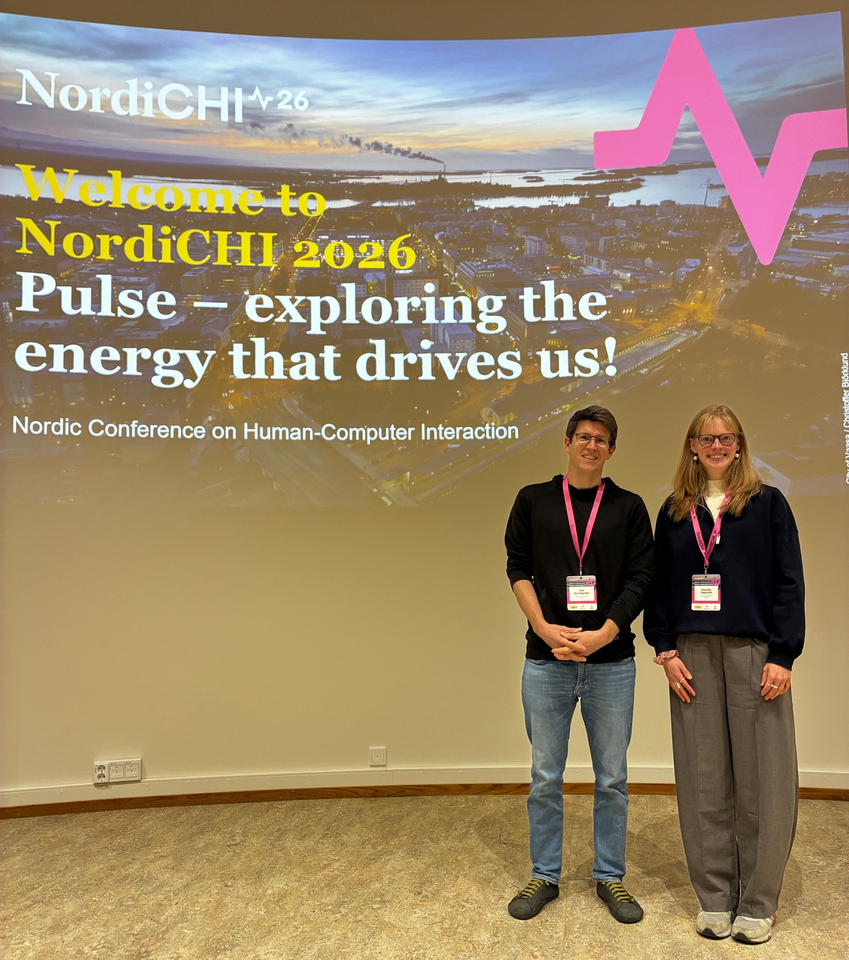
20.10.2026Der Lehrstuhl Psychologische Ergonomie waren mit insgesamt drei Publikationen auf der Nordic Conference on Human-Computer Interaction vertreten. Die NordiCHI’26 fand dieses Jahr vom 5. bis 7. Oktober im finnischen Vaasa statt. Die Konferenz stand unter dem Motto ‚Pulse – Exploring the energy that drives us‘. Tobias Grundgeiger und Nathalie Papenfuß nahmen an der Konferenz teil als Vortragende und Workshopteilnehmende.
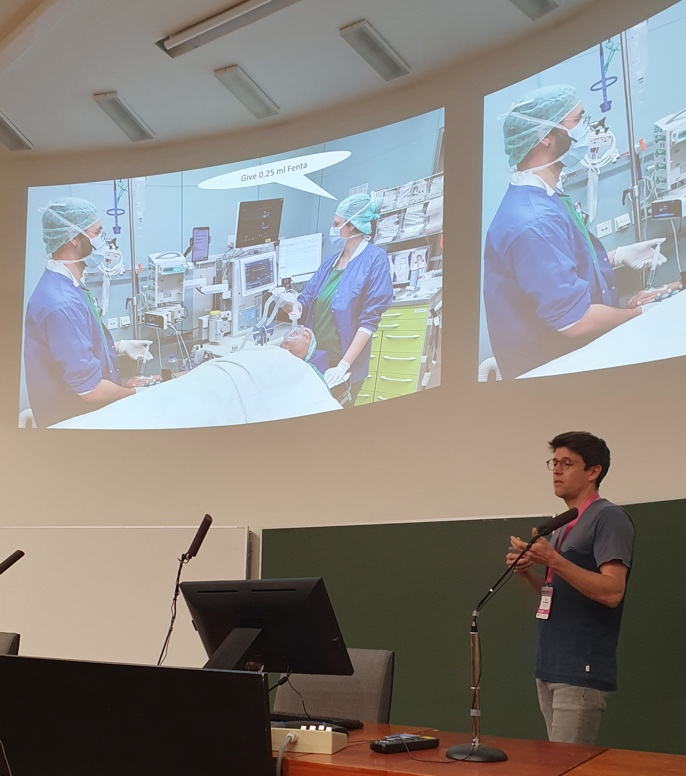
Tobias Grundgeiger präsentierte wissenschaftliche Erkenntnisse aus dem Forschungsprojekt CASSANDRA. Die Studie zeigt, dass der KI-gestützte Dokumentationsassistent für bei Aufgaben wie der Protokollierung der Medikamentengabe unterstützt und zugleich eine frequentere Nutzung die Motive, Arbeitsabläufe und das Situationsbewusstsein der Anästhesist:innen und Anästhesiepfleger:innen positiv beeinflusst. Spezifische Ergebnisse der Studie in dieser Publikation:
Abstract
Documentation of clinical interventions is important, but patient care tasks and the volume of documentation result in low-quality documentation. We used a mixed-methods approach to evaluate an AI documentation assistant for anesthesiologists across 57 inductions of anesthesia into patients, including a two-condition design (AI Assistant vs. No Assistant), repeated use of the AI assistant over four inductions of anesthesia, and interviews with the anesthesiologists. Using activity theory, the qualitative analysis showed that the AI assistant affected anesthesiologists’ motives for documenting and initially caused a nuisance in the workflow, before becoming a facilitator of work by supporting documentation, structuring work, and increasing situational awareness. The quantitative data showed improved documentation quality. We attribute the successful and unremarkable use of the AI assistant to its strong perceived usefulness among users despite not being fully reliable, and to the detailed contextual analysis as part of the design.
Tobias Grundgeiger, Stephan Huber, Adriana Wießner, Matthias Dunkelberg, Simon Ottenhaus, Anja Nagel, Christina Dilling, and Oliver Happel. 2026. From Nuisance to Facilitator: A Mixed-Methods Evaluation of an AI Documentation Assistant for Anesthesiologists in the Operating Room. Proceedings of the 14th Nordic Conference on Human-Computer Interaction. Association for Computing Machinery, New York, NY, USA, Article 4, 1–19. https://doi.org/10.1145/3829807.3829811
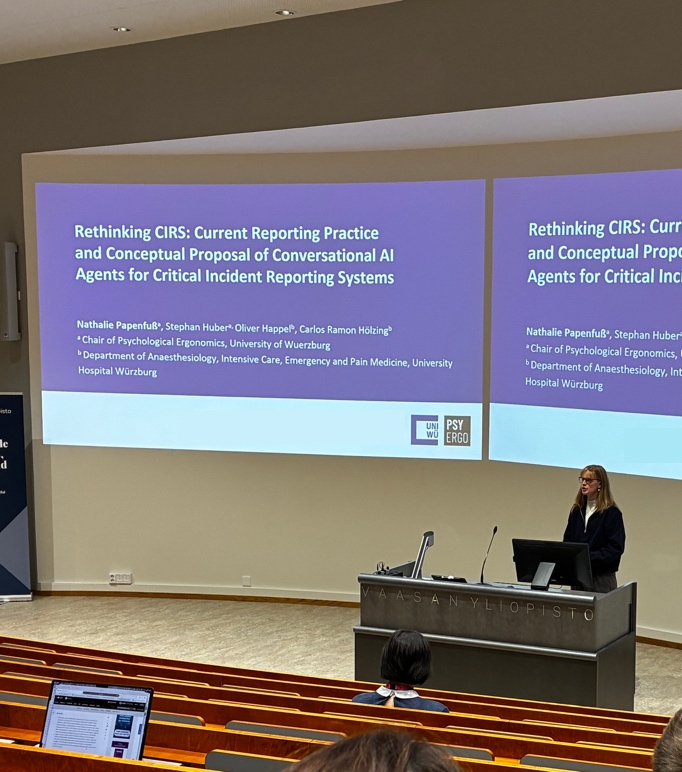
Verbleibend im anästhesiologischen Kontext, untersucht die Arbeit von Nathalie Papenfuß die Beweggründe von medizinischen Fachkräften für die Nutzung und Nicht-Nutzung von kritischen Fallberichtssystemen, sog. Critical Incident Reporting Systems, sowie konzeptionelle Explorationen von Conversational AI Agents.
Abstract
Critical Incident Reporting Systems (CIRS) are considered to improve patient safety in healthcare. However, the effectiveness of CIRS depends on healthcare professionals’ commitment to report incidents. First, we gain an understanding of healthcare professionals’ current use and negligence of CIRS through thematic analysis of interviews with anesthesiologists and nurses. Second, we elaborate on conceptual roles of CIRS and sketch conversational AI features. Instead of an unpopular stigmatized report-only form, CIRS could support healthcare professionals as a digital companion that enables narrative reporting, encourages learning processes and reporting of near-misses and success stories, and enables following and completing submitted reports anonymously. We conclude that the current abilities of CIRS misalign with user needs and contextual requirements. We contribute (1) qualitative insights on (non-)usage of CIRS and (2) rethink the role of CIRS, speculating on features to entail Safety-II. Our envisioned conversational AI agents support reporting activities to ultimately increase reporter engagement.
Nathalie Papenfuß, Stephan Huber, Oliver Happel, and Carlos Ramon Hölzing. 2026. Rethinking CIRS: Current Reporting Practice and Conceptual Proposal of Conversational AI Agents for Critical Incident Reporting Systems. Proceedings of the 14th Nordic Conference on Human-Computer Interaction. Association for Computing Machinery, New York, NY, USA, Article 59, 1–20. https://doi.org/10.1145/3829807.3829867
Interaktive Technologien reichen über eine produktivitätsgetriebene Nutzung hinaus. Nathalie Papenfuß stellte methodisch und gestalterische Implikationen zur Untersuchung von existenziellen Lebensfragen. Die menschzentrierte Ergebung existenzieller Lebensfragen mittels der Methode der Cultural Probes bedarf sprachlichem Fingerspitzengefühl sowie einem weichen und offenen Rahmen gegenüber den aufkommenden Antworten. Weitere Erkenntnisse in der Studie:
Abstract
Existential HCI argues that interactive technologies shape the experience of human existence, including questions of identity, freedom, and meaning. While this perspective is grounded in established theory, concrete methodological examples of empirical research and design practice are limited. To address this gap, we developed and deployed Existential Probes, a participant-led inquiry method inspired by the existential inquiry framework. We present the iterative development and field deployment with 13 young adults and show how Existential Probes make existential concerns visible early in the design process. Reflecting on this process, we identify methodological tensions that relate not only to Existential Probes but to probes more generally: probes focus on material, but language is equally important; probes provoke reflection on existential concerns, but do not provide coping support; and their outcomes impact participants and researchers. We conclude with practical considerations for integrating existential concerns into HCI practice and reconsidering principles of probe-based methods.
Nathalie Papenfuß, Sara Wolf, Lena Kutter, and Jörn Hurtienne. 2026. Existential Probes: A Method to Elicit Existential Concerns in HCI. Proceedings of the 14th Nordic Conference on Human-Computer Interaction. Association for Computing Machinery, New York, NY, USA, Article 60, 1–14. https://doi.org/10.1145/3829807.3829868
Im Rahmen des Projekts NIDAaiD nahm Tobias Grundgeiger am ganztags Workshop “The Many Facets of Eudaimonia: Bridging the Gap Between Theory and Design Perspectives” teil. Im Workshop wurden Theorien und Methoden diskutiert und in ein Framework einsortiert, das helfen soll, Technologienutzung bedeutungsvoller zumachen bzw. durch den Einsatz von Technologie zu einem bedeutungsvolleren Leben beizutragen.
Weitere Eindrücke
Weitere Bilder