PsyErgo auf der MuC 2026
11.09.2026Die Mensch-und-Computer ist die größte europäische HCI-Konferenz. Die Besonderheit der Konferenz ist, dass es ausgewiesene Tracks für wissenschaftliche und praktische Beiträge gibt, wodurch Wissenstransfer ermöglicht wird, welchen Besuchende auch leben. Der Lehrstuhl für Psychologische Ergonomie war mit zwei Beiträgen vertreten.

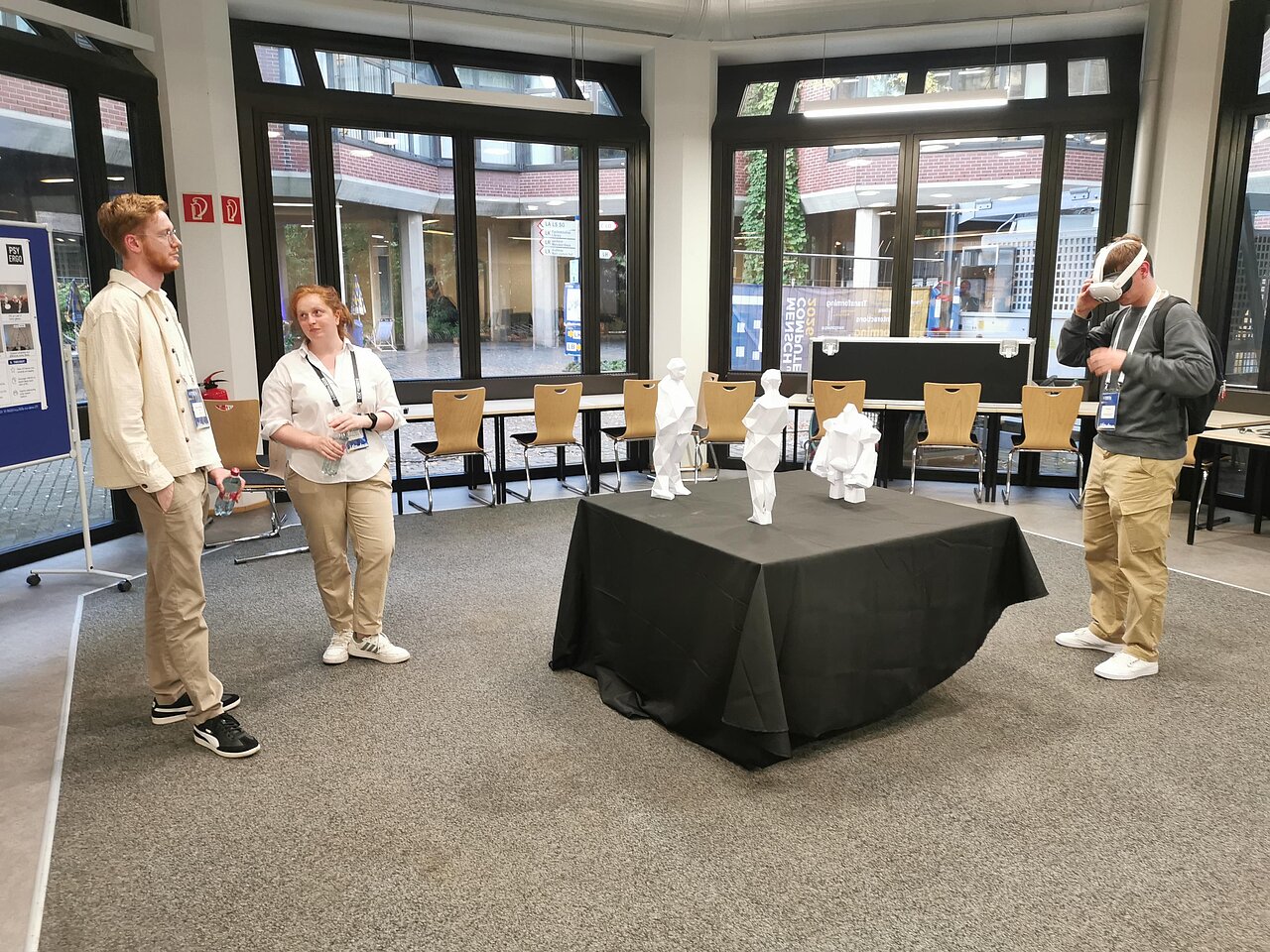
Julia Wienkopp lud in der Demo-Session dazu ein, eine Alltags-Interaktion durch sechs verschiedene „Theorie-Brillen“ zu betrachten. Besuchende konnten in der Augmented-Reality Demo bewusst theoretische Facetten ein- oder ausblenden und dabei reflektieren, welche Aspekte sie bei üblicher Fokussierung auf nur eine Theorie vielleicht manchmal übersehen.
Abstract:
As an interdisciplinary field, Human-Computer Interaction (HCI) is shaped by diverse theoretical traditions that influence what researchers notice, value, and critique in interaction scenarios. Yet these theoretical lenses often remain implicit, difficult to articulate, and knowledge about different theoretical traditions is scattered. To make HCI researchers and students aware of their theoretical lenses and initiate reflection, we designed the Theory of Human–Computer Interaction Glasses, an augmented reality demonstration that allows visitors to explore an interaction scene through six different theoretical lenses (or „glasses“). Through the theory glasses, visitors can experience how each HCI theory highlights distinct phenomena and offers different explanations. By actively switching glasses, visitors are invited to compare theoretical lenses and reflect on their own theoretical positioning. Ultimately, we hope that this demonstration improves understanding across research traditions and reduces friction to transform intertheoretical interactions.
Wienkop, J., Grundgeiger, T., Beuke, T., Von Trümbach, M., und Wolf, S. (2026). Taking Different Views on the World: Experiencing Six Different Theories of Human-Computer Interaction through Augmented Reality. In Mensch und Computer 2026 - Tagungsband. DOI: 10.18420/muc2026-mci-demo-271.
Stephan Huber präsentierte ein Poster zur Emotionserkennung in Remote User Research. Die Studie mit Tim Gröppel zeigte, dass User Researcher über den Audiokanal (d.h. Nutzeraussagen) Emotionen am zuverlässigsten und mit geringerem Aufwand bestimmen können als etwa aus der Mimik und dem Nutzungskontext.
Abstract:
Recognizing users' emotions is the first step to determine their experience. Remote settings are popular in UX studies but impede the judgment of user emotions. A previous online study hinted towards the importance of other cues than facial expressions in remote emotion recognition. Overcoming the limitations and extending the scope of online studies, we conducted a lab-study with N=58 participants who assessed users' emotions from short videos. Our within-design manipulated the information availability of user in video, interface in video and sound (i.e., user utterances). We found sound to be crucial because it increases the observer's empathic accuracy and lowers their mental effort during emotion recognition. In contrast, the visibility of the interface which is necessary to contextualize the emotion and derive design implications had no effect on empathic accuracy. We contribute empirical evidence and discuss the role of information channels in remote user research.
Huber, S., und Gröppel, T. (2026). Sound Improves Empathic Accuracy and Rating Ease in Remote Emotion Assessment – Visibility of the Interface has no Effect on Emotion Recognition. In Mensch und Computer 2026 - Tagungsband. DOI: 10.18420/muc2026-mci-wip-349.
Weitere Bilder