Führungsunterstützung während innerklinischer Reanimation durch eine Cognitive Aid App
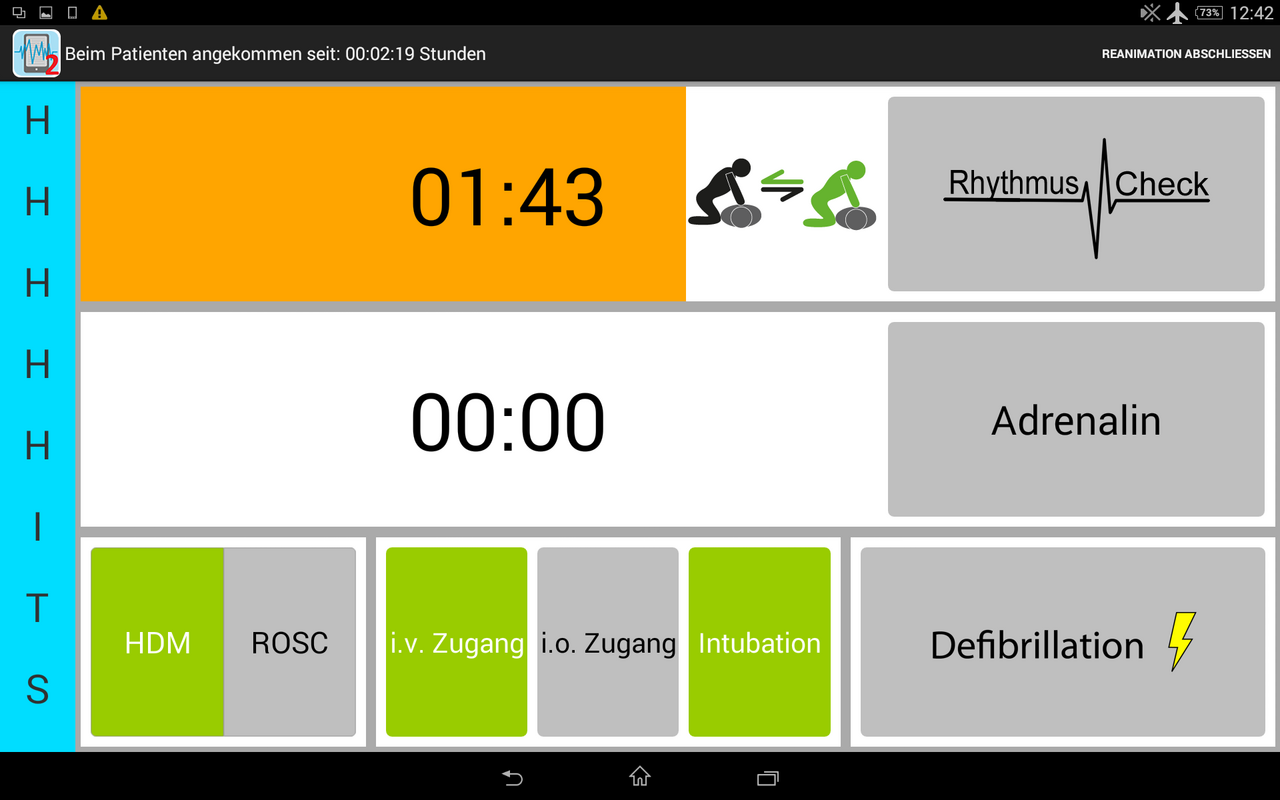
30.03.2026Carlos Ramon Hölzing, Tristan Ernst, Thomas Wurmb, Patrick Meybohm, Oliver Happel (alle am Universitätsklinikum Würzburg) und Tobias Grundgeiger (Lehrstuhl für Psychologische Ergonomie) haben gemeinsam einen neuen Beitrag in der Zeitschrift Clinics and Practice veröffentlicht. Der Artikel mit dem Titel „Evaluation of a Cognitive Aid Application to Improve Non-Technical Skills in Simulated Cardiopulmonary Resuscitation (CPR): A Randomised Controlled Trial“ ist Teil eines Special Issues zu Emergency and Disaster Medicine: Preparedness, Response, and Resilience in Health Systems. Der Artikel zeigt, dass sogenannte cognitive aids – Unterstützungssysteme, die einen Nutzenden bei der Ausführung einer Handlung unterstützen – Potenzial zur Verbesserung des Führungsverhaltens in Notfallsituationen haben. Der Artikel ist als Open Access publiziert.
Hölzing, C. R., Ernst, T., Wurmb, T., Grundgeiger, T., Meybohm, P., & Happel, O. (2026). Evaluation of a Cognitive Aid Application to Improve Non-Technical Skills in Simulated Cardiopulmonary Resuscitation (CPR): A Randomised Controlled Trial. Clinics and Practice, 16(4), 69. https://www.mdpi.com/2039-7283/16/4/69
Zusammenfassung
Background/Objectives: The success of cardiopulmonary resuscitation relies on both technical and non-technical skills. Cognitive aids, such as checklists, have been shown to enhance technical performance in emergencies. The aim of this study was to evaluate the capabilities of a cognitive aid app (CA-App) in improving non-technical skills.
Methods: In this single-centre randomised controlled trial, 62 teams, each consisting of an experienced physician and a specialised nurse, were randomised either to CA-App or control (No-App) groups performing cardiopulmonary resuscitation. The study was registered with the German Clinical Trials Register (DRKS) on 4 November 2025 (DRKS00038336). The primary outcome was the team leader’s performance in non-technical skills, assessed via the validated Team Emergency Assessment Measure (TEAM™) questionnaire by two raters. Secondary analyses examined TEAM™ subdomains (leadership, teamwork, task management) and the correlation between app usage duration and performance.
Results: 62 out of 67 teams were finally randomised, with 31 teams in each group. The CA-App group demonstrated a marginally elevated median TEAM™ total score (83.33%) in comparison to the control group (79.33%), although this difference was not statistically significant (p = 0.190). The leadership subgroup score was significantly higher in the app group (p = 0.006). There was no significant correlation between the time spent using the app and improved team performance (r = 0.260, p = 0.166).
Conclusions: The CA-App demonstrated potential for improving leadership skills, a critical component of non-technical skills in emergency scenarios. These findings highlight the potential capability of cognitive aids to improve non-technical skills and the need for further research to explore their optimal design and integration into clinical practice to enhance team performance and patient safety.